
Creating value propositions: a lecture for engineers at the University of Sheffield
Why someone should choose your idea over what they do now. What I told the SELSA group at the University of Sheffield on 3 November 2026, with the slides to download.
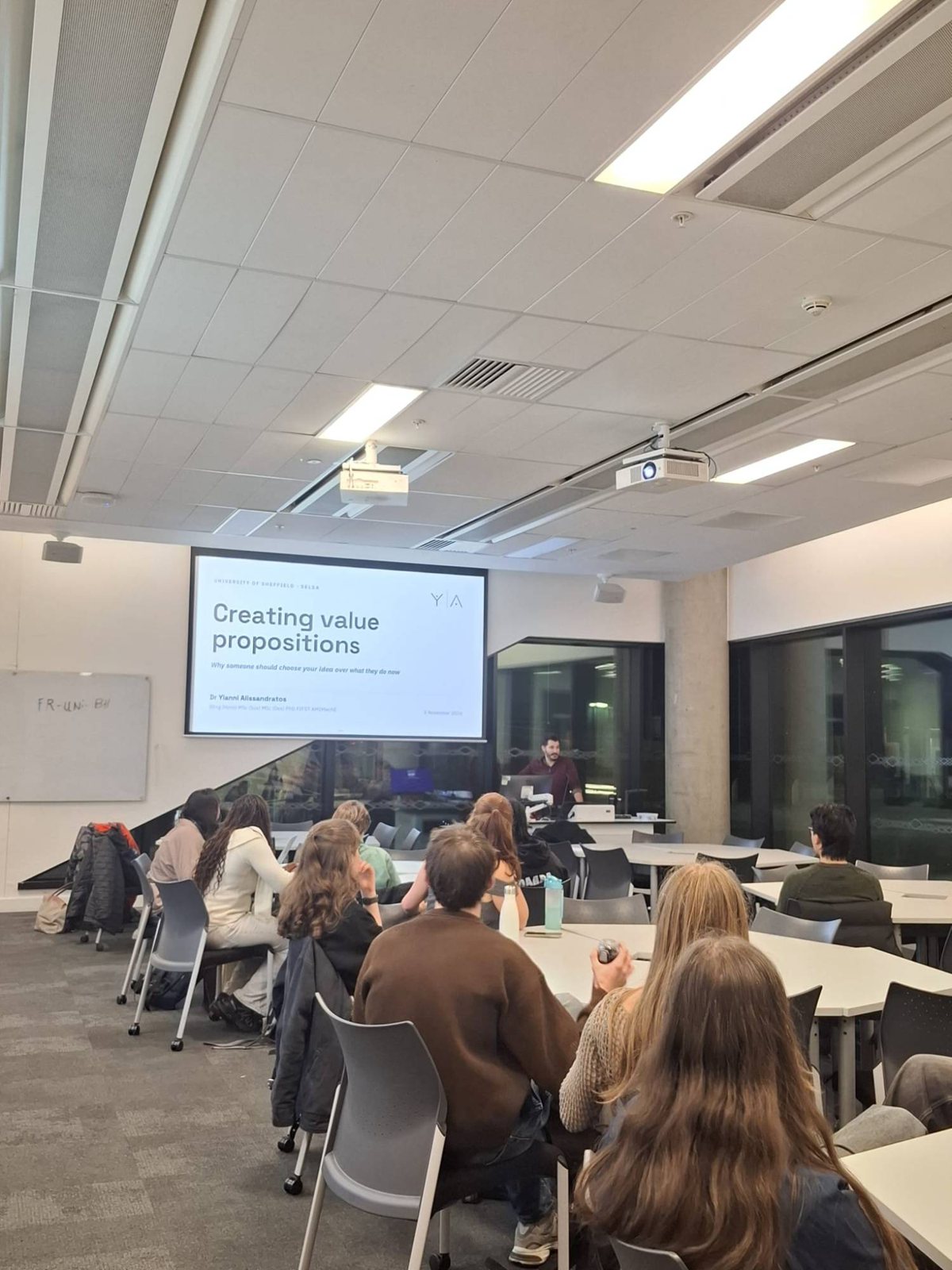
I was asked to spend an evening with the SELSA group at the University of Sheffield on something every engineer is eventually judged on and almost none of us are taught: how to explain why someone should choose your idea over what they do now. Four parts. Why value matters. What a value proposition actually is. How value propositions meet strategy inside a real company. And then most of the session, which was theirs: build one, stress-test it, pitch it in sixty seconds. This is the lecture part. The slides are at the bottom.
Why value matters: the outsider in every room
I started with my own career, told twice. Told as a spec sheet it is a list: mechanical engineering, then design, then bioprocess, then vaccines, then industry. Told as value it is four steps, and the steps are the point. First you execute it: as a mechanical engineer from 2006 I turned someone else's spec into parts that fit and lines that kept running. Then you implement it: as a consultant in process design and scale-up I turned processes into value other people could run. Then you manage it: in R&D leadership I managed the people, so the value propositions matched the strategy. And then you communicate it: today, in industry and board advisory, the job is communicating value to the people who fund it, boards, partners, investors.
The higher you climb, the more of your job is communicating value, and the language changes at every level. An engineer talks to their lead in specs, tests and results. A lead talks to their manager in delivery, time and risk. A manager talks to directors in cost, capacity and KPIs. A CEO talks to shareholders in growth, returns and strategy. The audience changes, so the language has to change. The question for the room was simple: how good are we at it?
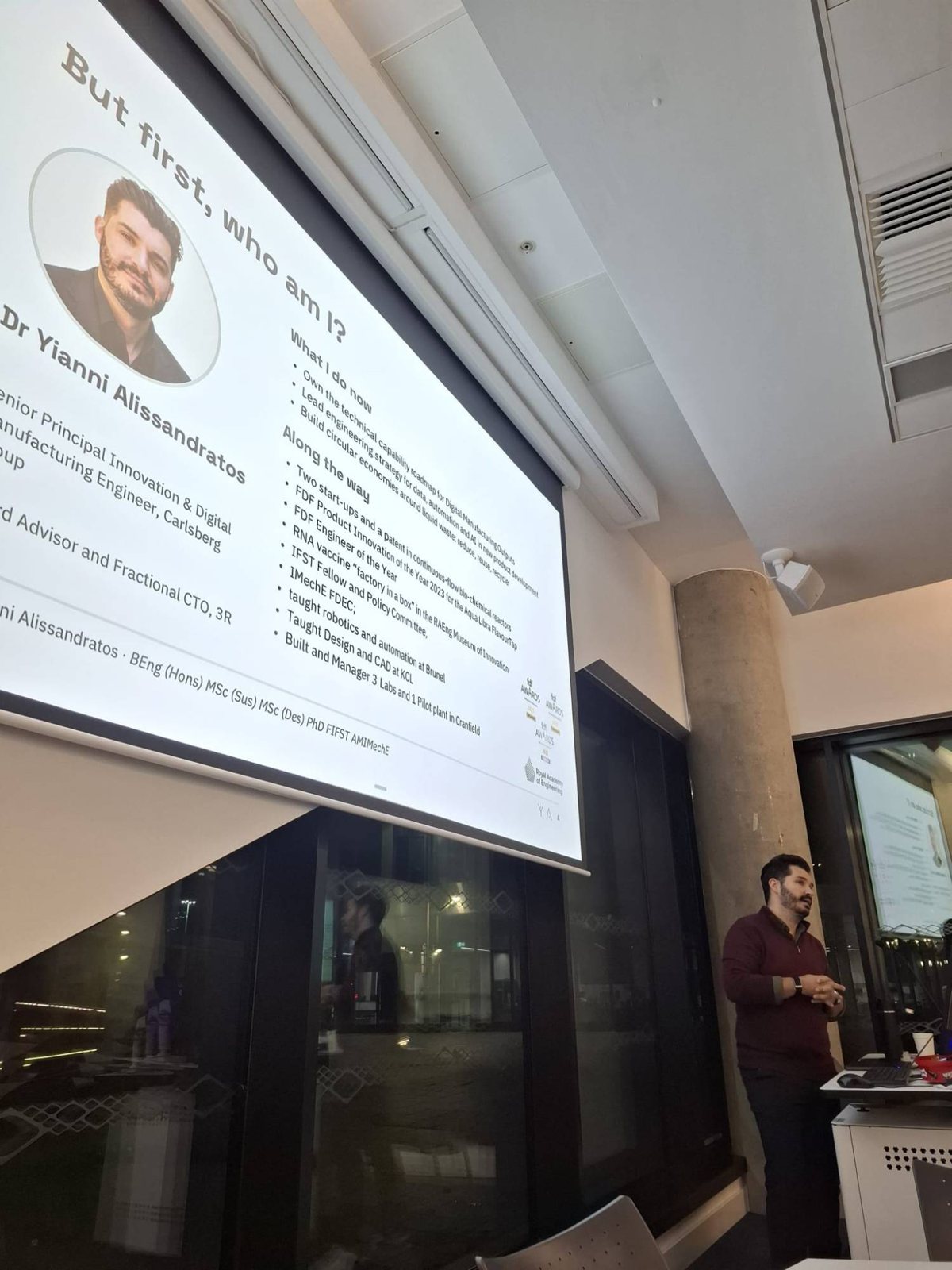
And before any idea, there is you. Whatever you pitch, you are most of the value. People fund the person as much as the idea. So two questions come before everything else. What value do you bring to the table: your skills, your evidence, your track record, the reason it is you. And what level do you want to talk at: engineer, lead, manager or board. Pick the room, then speak its language.
What a value proposition is
In business terms it is a clear statement of why a specific person should choose your thing over what they do now. Not a slogan. Not a feature list. It applies to a product, a process change, a research project, a community service, or you in an interview.
It has four parts. Who: one specific customer or beneficiary, never “everyone”. Problem: the pain or need, in their words, not yours. Alternative: what they do today, and why yours beats it, and very often the rival is “do nothing”. Evidence: why they should believe you, a number, a test, a pilot, a quote.
Then we tested it. Pitch A: “Our new 2,000 litre bioreactor line: 90 percent faster changeover, automated clean-in-place, plus or minus 0.05 pH control, GMP-ready.” Pitch B: “Lets a vaccine plant switch products in two days instead of three weeks, so it can respond to an outbreak.” B gets funded. A lists the kit and names nobody. B names who, what changes, what it beats and why it matters. And A's numbers are not wasted: they become B's evidence. The faster changeover is what the plant director needs to hear, as two days instead of three weeks. The automated clean-in-place is what operations and QA need, as shifts back and less contamination risk. The pH control is what Bob in finance needs, as fewer failed batches written off. GMP-ready is what the board and the regulator need, as approved faster, so we can respond to an outbreak.
Value is defined by the receiver, not the specification.
Your spec is your action list as an engineer: flow rates, tolerances, materials. What Bob in finance hears is cost, payback, risk. The work is translating one into the other.
Your stakeholders are your network
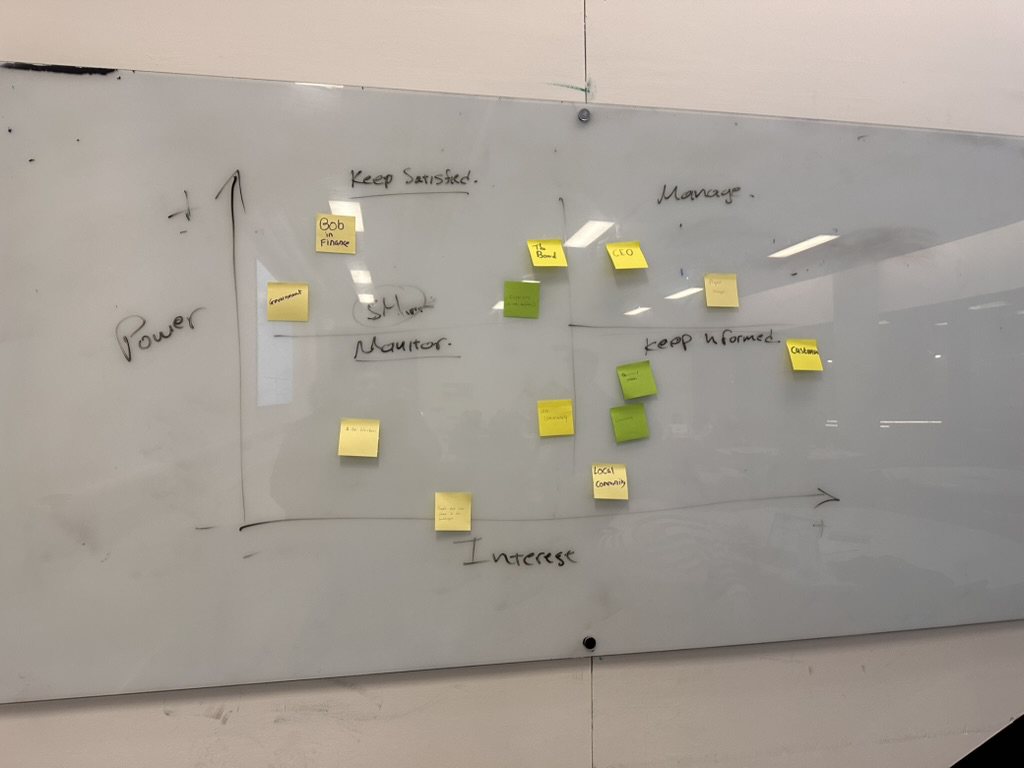
One project does not have one value proposition. The operator values safer, easier work and will ask whether this makes their shift easier. The engineering manager values reliability and delivery and will ask whether it will work, and on time. Bob in finance values cost, payback and risk and will ask what it costs and when we get it back. QA, health and safety and the regulator value compliance and will ask whether it is safe and validated. The sponsor or board values strategy and reputation and will ask why this, and why now. The community values local impact and will ask what is in it for them. Six stakeholders, six value propositions, and no, you cannot have one that fits all. That is why you map them, by power and by interest, into the ones you manage closely, keep satisfied, keep informed, and monitor.
Where value propositions meet strategy: a real story
Then a story from practice, because this is where it gets real. Waste valorisation: three pitches, three noes. Our process waste was full of chemicals. Stage one, pitched to R&D: “let's recycle them.” Shot down. Not worth it. Sugar is cheap. What was missing was a who and a problem: a technology looking for an owner. Stage two, pitched to factory leadership. The factory pushed back: no space for water, water is cheap, and what do we do with the filtrate? Missing a problem. Nothing was imminent in the factory, and the evidence did not fit the plant. Stage three, pitched to ESG: “we halve our water ratio and save money.” Great, but why? Pumps can do that. We already reuse water.
Stage four was different. First, the groundwork: a couple of months campaigning on the value of water, including a talk at the FDF. Then the proposition, built for each receiver. For plant leadership facing drought risk and rising effluent costs: we get more from the water target in our ESG strategy. For the engineers: it builds on kit they already run, added to the back end of their CIP project. For leadership: local proof, future communities, and the directors' own ESG target, a best-in-class water ratio. Approved. Where we ended: water recovered, cleaned and returned to the plant, and sugar recovered as a syrup for new markets.
Same waste. Same technology. A different value proposition, and a whole network behind it.
The way to check a proposition is to ladder it up to the strategy. Strategic priority: a healthier planet. Target: cut the water used per litre of product. Project: recovering water from process waste. Value proposition: get more from technology already in place, move our water ratio to best in class, support local communities, and future-proof us against drought. If you cannot draw that ladder, Bob in finance will not fund it. And a proposition is not a snapshot. It is a live, breathing thing that changes as the network around it changes.
The secret sauce is a Venn diagram. What the user values on one side, what the strategy needs on the other. Only the user loves it? It gets admired. Only the strategy needs it? It gets ignored. Both? It gets funded.
Four engineering traps
Leading with features: watts, tolerances and materials before anyone knows why they matter. “Everyone” as the customer: if it is for everyone, nobody feels it is for them. Ignoring the alternative: switching costs time, money and risk, and “good enough” usually wins. No evidence: a claim without a test, a number or a user is just an opinion.
Formal processes exist for all of this, and some functions will force you to speak their language. Corporate and FMCG use the stage-gate business case. R&D teams use NABC: need, approach, benefit per cost, competition. Research funders use the Heilmeier Catechism. Start-ups use the value proposition canvas and the pitch deck. Product and marketing use Moore's positioning statement. Amazon works backwards from a press release. They are all the same four parts, in a different room's language.
Then the room did the work
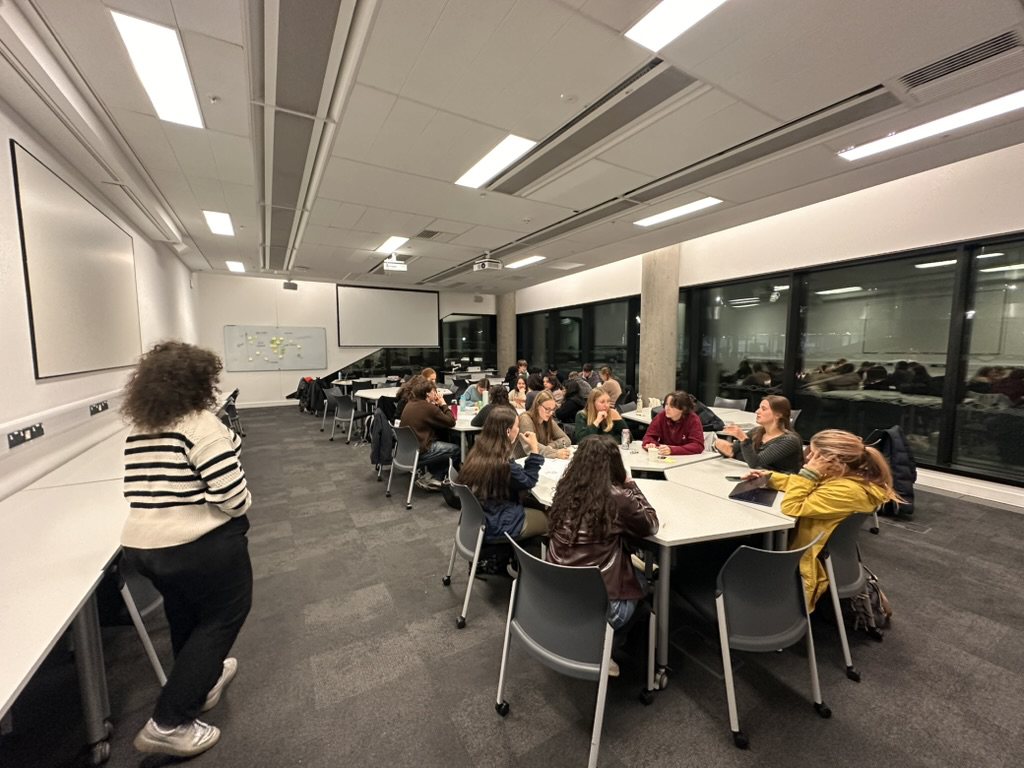
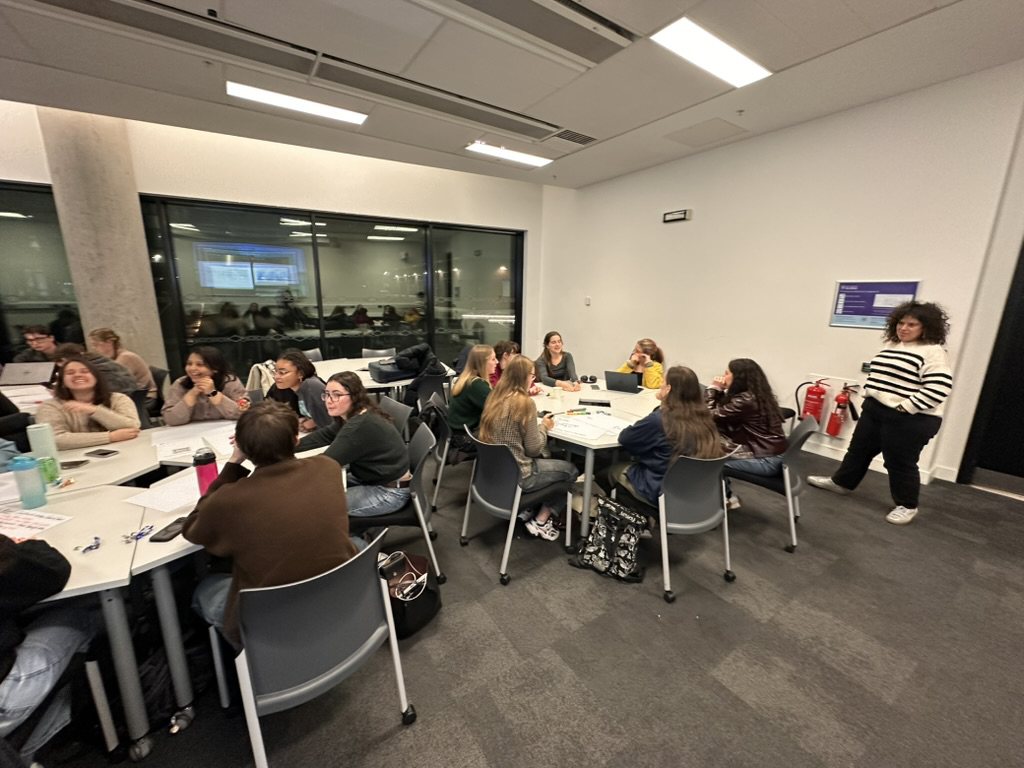
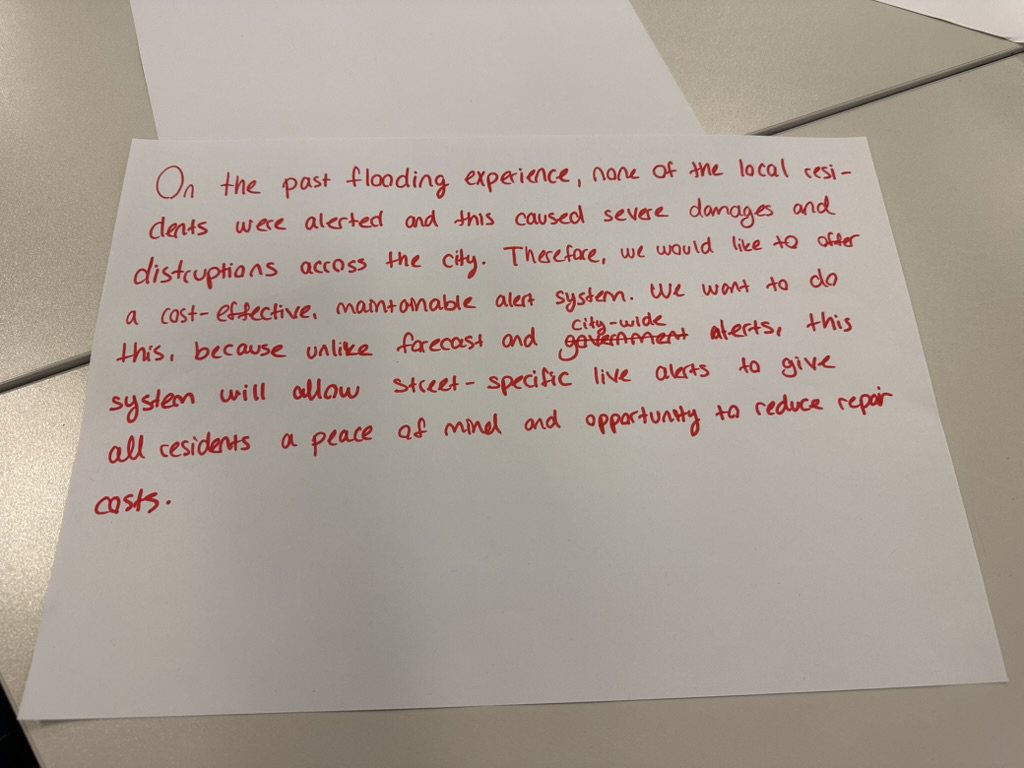
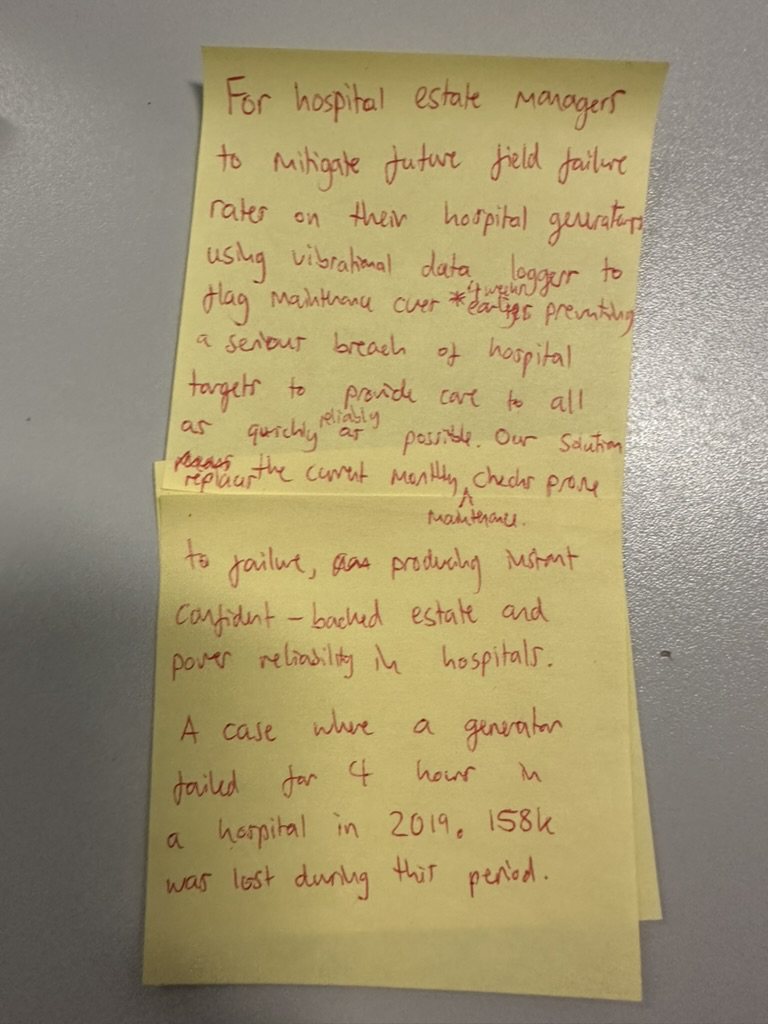
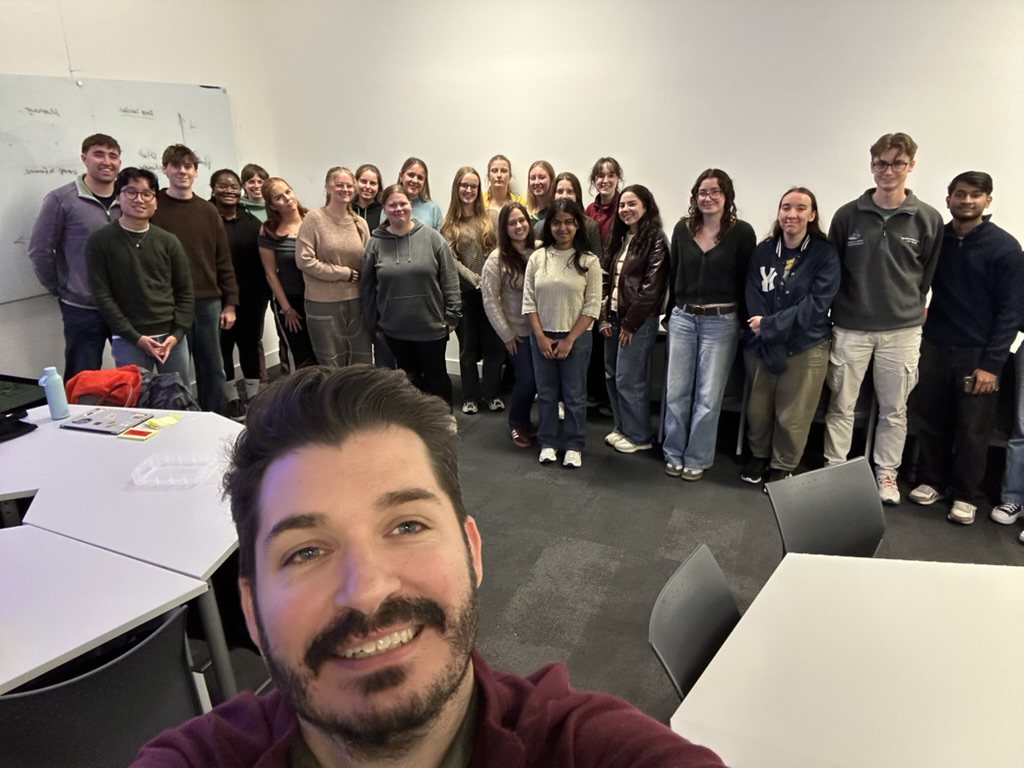
The rest of the evening was theirs: a case built together, a draft of their own, a swap to play Bob in finance and grill another team with three questions (why would I switch, what is the evidence, what does it cost me including risk and hassle), one rewrite of the weakest line, and a sixty-second pitch with the spec last, and only if someone asks. I will not narrate that part; it belongs to them. But the room was good, and the pitches were better than the first drafts, which is the whole idea.
Before you describe what you built, say who it's for and what changes for them.